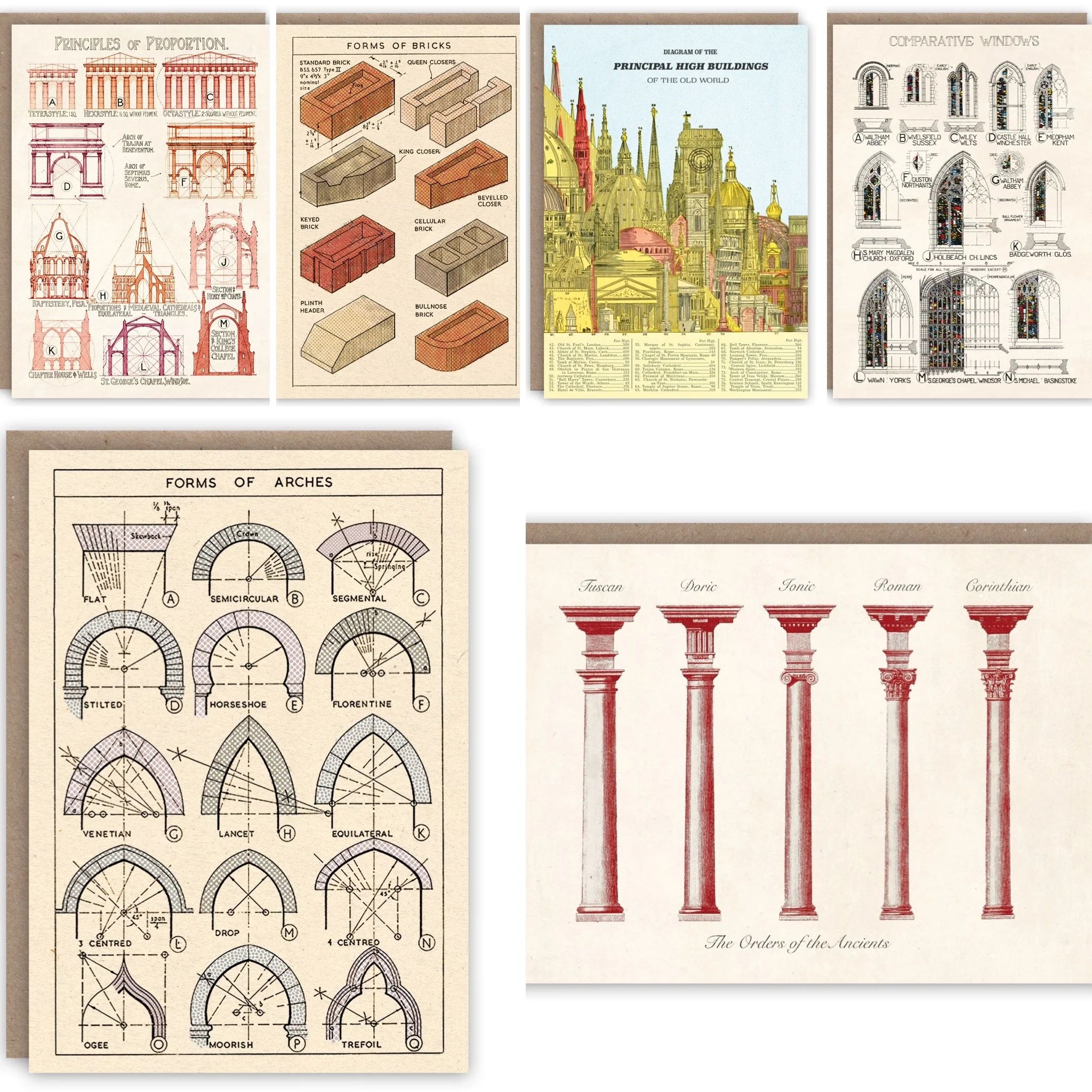
The Architectural Icons Greeting Card Collection
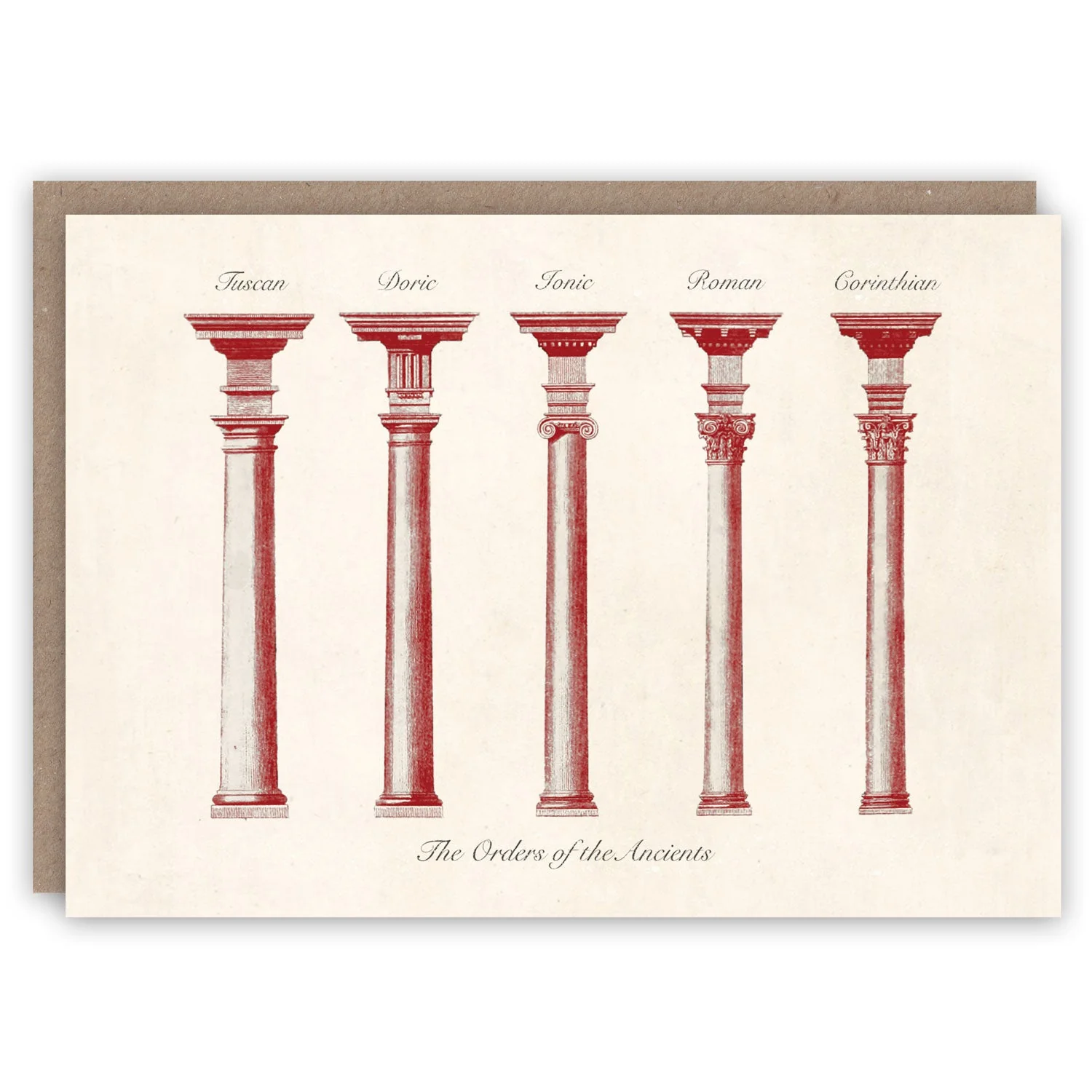
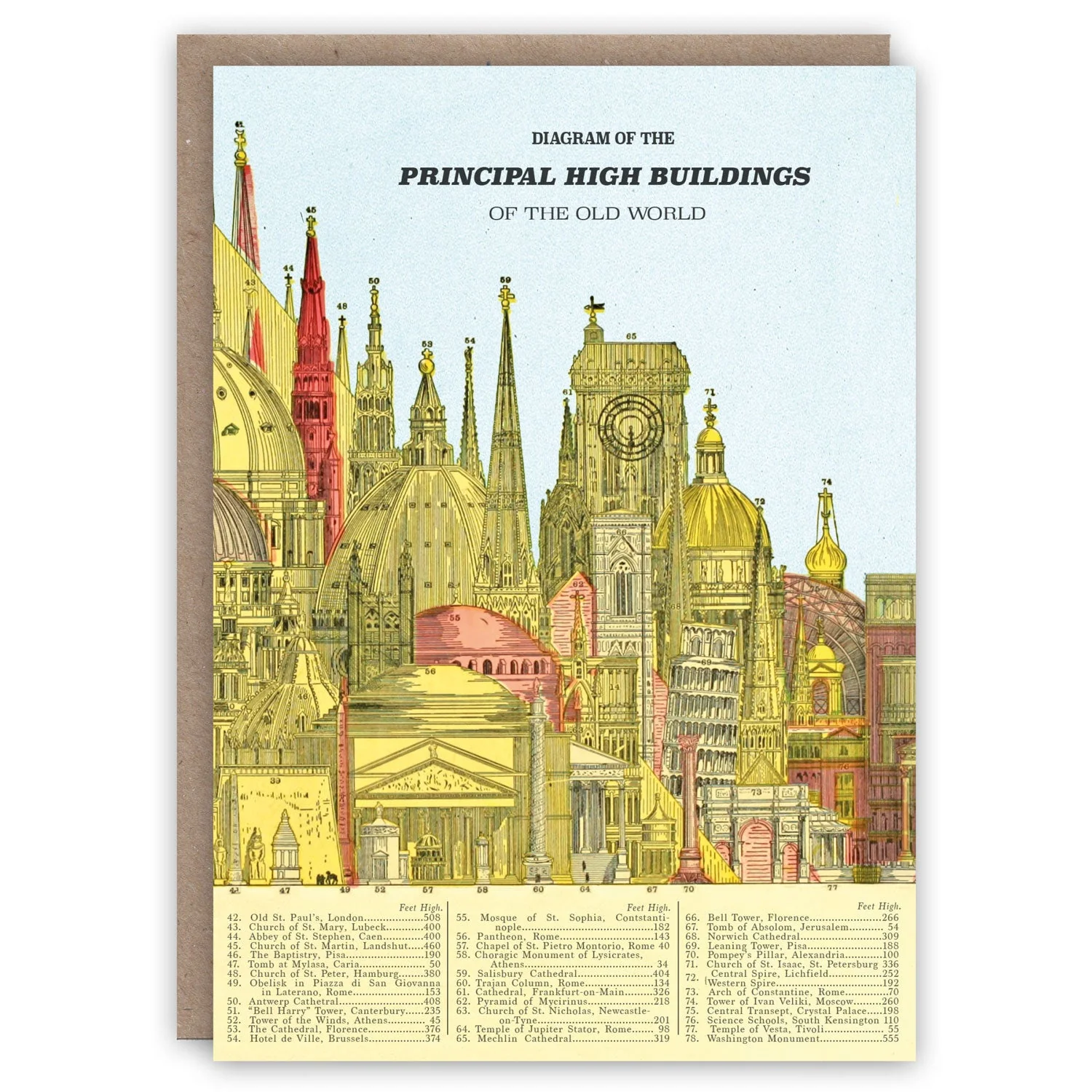
Which were the world’s tallest buildings in the nineteenth century? What is the difference between a Tuscan and a Doric column? These six greeting cards feature archival illustrations that answer these and other questions about old-world architecture.
They are printed in England on uncoated, light cream 300 gsm Italian paper, which is recyclable, biodegradable, and FSC certified. Each greeting card is 170 mm x 120 mm (approximately 5" x 7") and blank inside, individually wrapped in a compostable wrapper made from plants, and paired with a 100% recycled, 110 gsm kraft envelope.
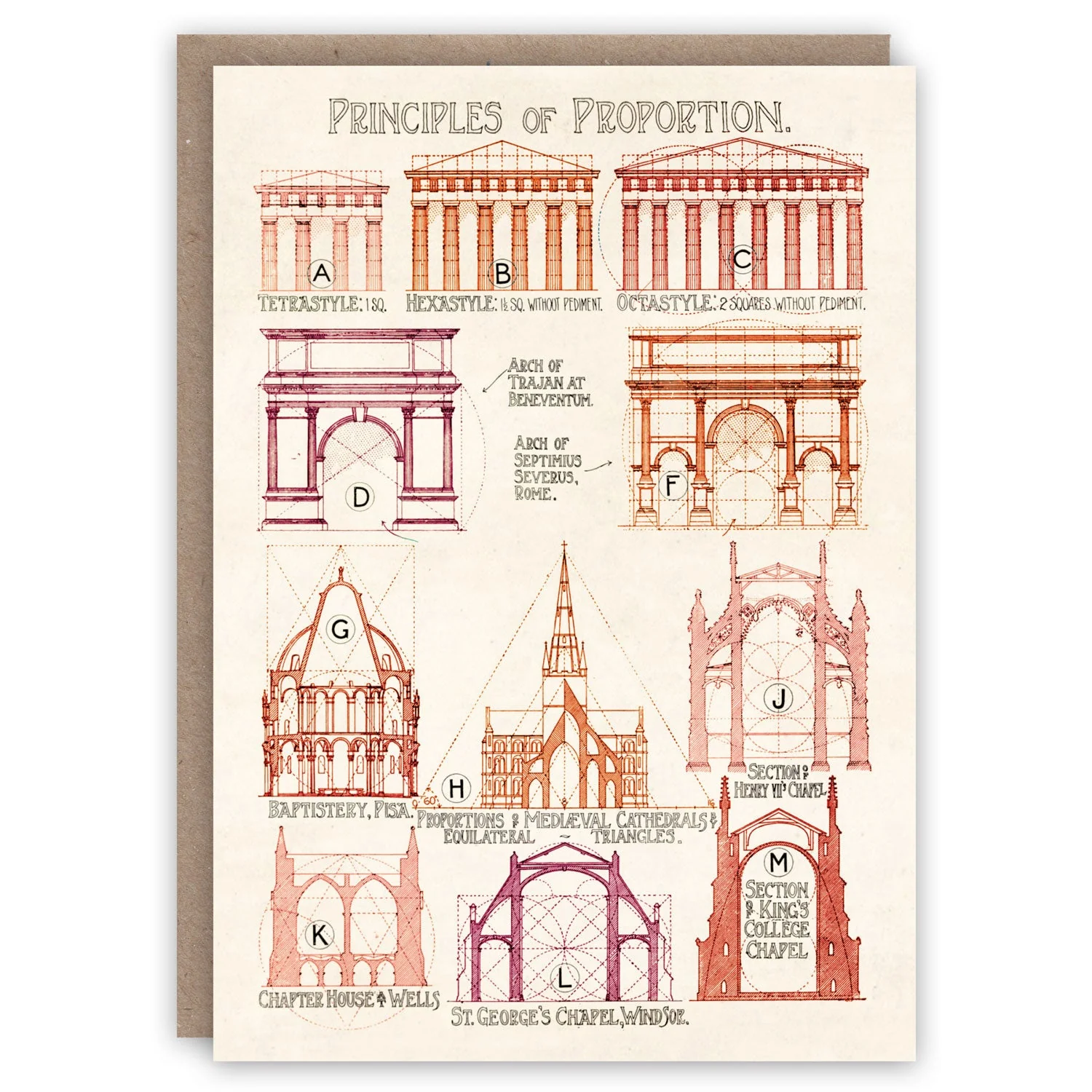
Principles of Proportion
Architecture greeting card illustrating “Principles of Proportion,” adapted from the illustration in A History of Architecture on the Comparative Method for the Student, Craftsman and Amateur, by Banister Fletcher (5th ed., 1905).
Orders of the Ancients
Greeting card illustrating Greek and Roman columns, adapted from A Treatise on the Decorative Part of Civil Architecture, by William Chambers, with illustrations by Joseph Gwilt (1862).
Principal High Buildings
Double-sided greeting card illustrating principal high buildings of the old world, adapted from Cram’s Unrivaled Family Atlas of the World (1891). The graphic continues onto the back of the card, displaying the first forty-one high buildings and completing the key to names and heights.
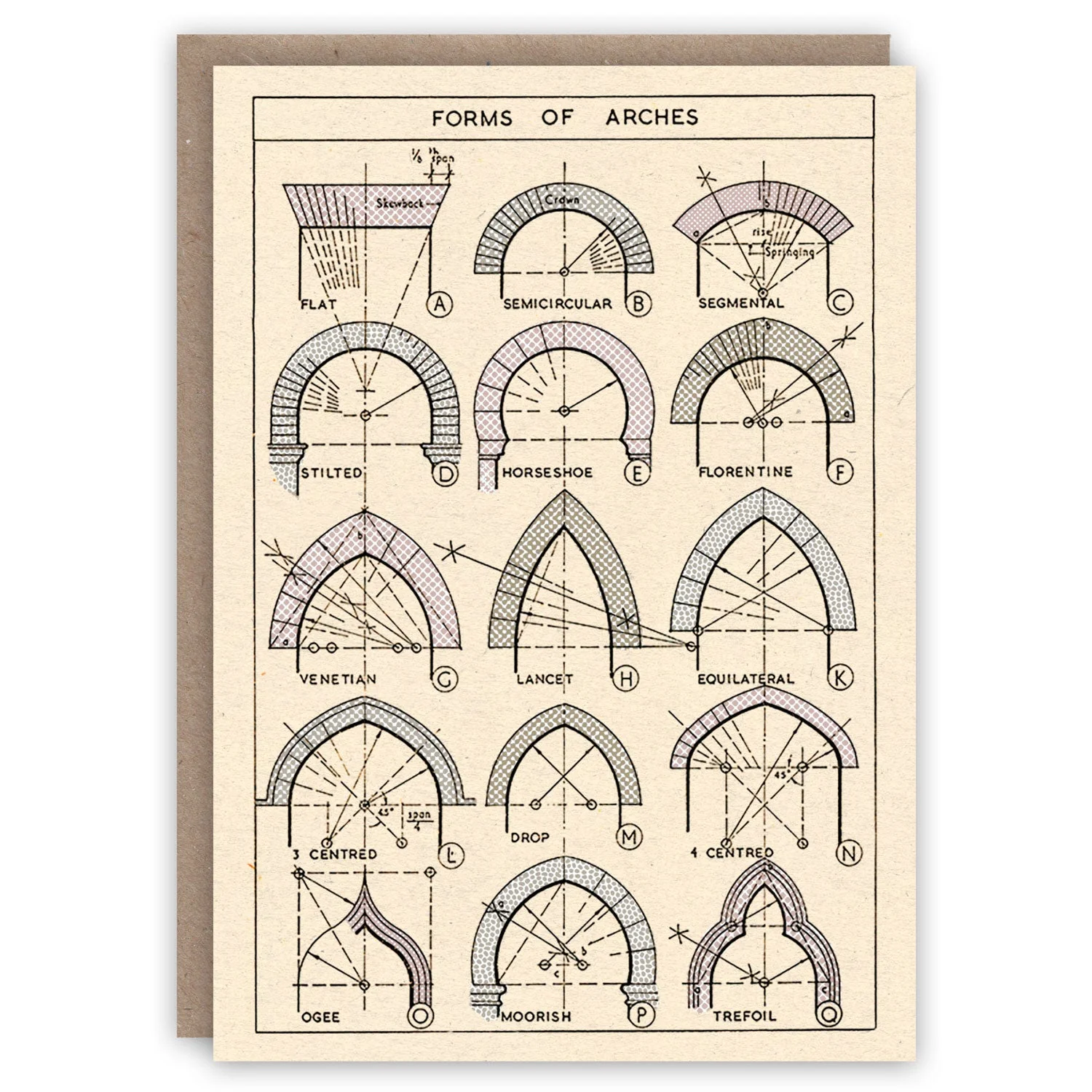
Forms of Arches
Greeting card illustrating the structures of different types of arches, adapted from Building Construction and Drawing, by George A. Mitchell and A.M. Mitchell (21st ed., 1953).
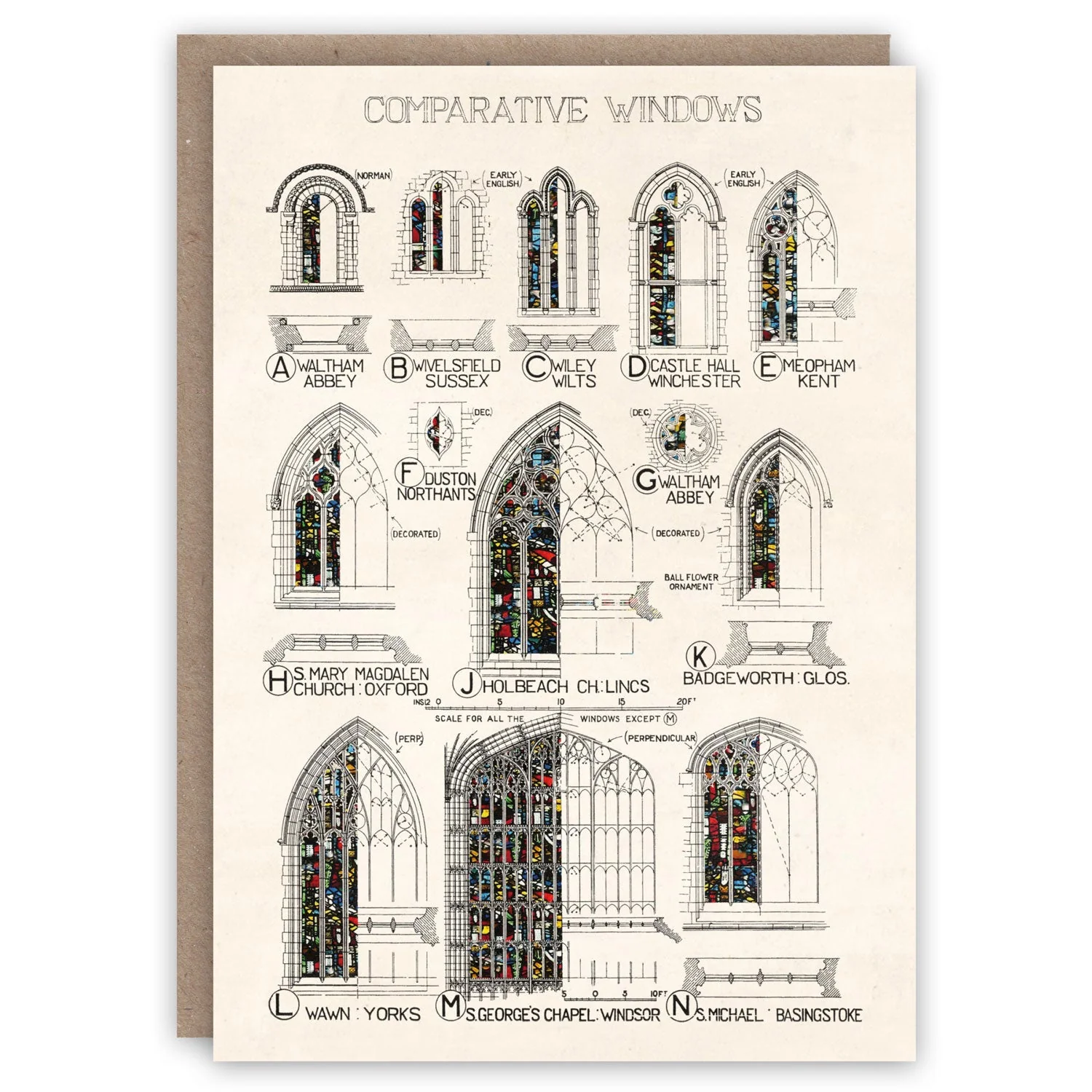
Gothic Windows
Greeting card illustrating types of gothic windows. The illustration compares window tracery design of English Gothic church architecture as it developed. Adapted from the illustration in A History of Architecture on the Comparative Method for the Student, Craftsman and Amateur, by Banister Fletcher (14th ed., 1948).
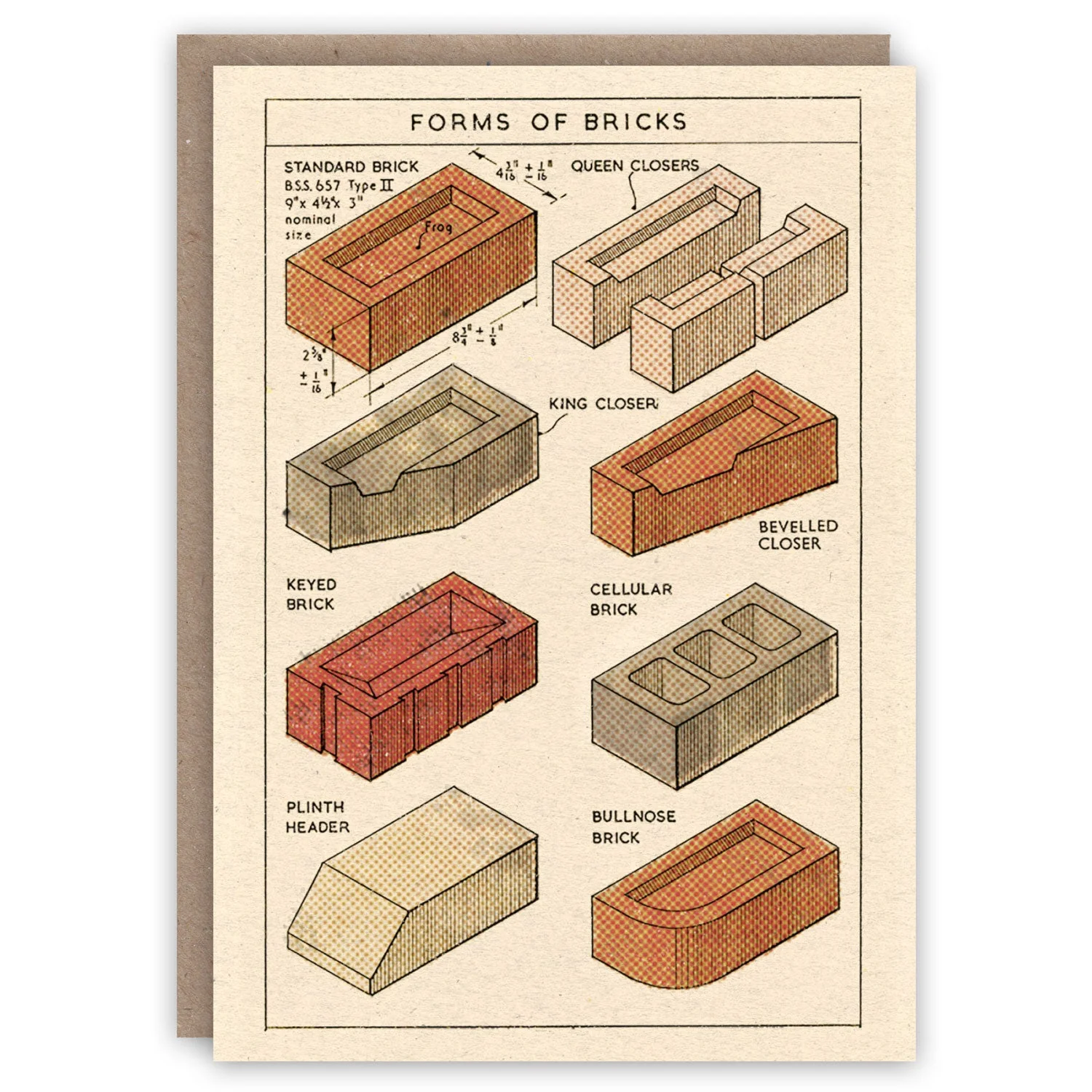
Forms of Bricks
Greeting card illustrating types of bricks, adapted from Building Construction and Drawing, by George A. Mitchell and A.M. Mitchell (21st ed., 1953).
Original: $22.50
-65%$22.50
$7.87Product Information
Product Information
Shipping & Returns
Shipping & Returns
Description
Which were the world’s tallest buildings in the nineteenth century? What is the difference between a Tuscan and a Doric column? These six greeting cards feature archival illustrations that answer these and other questions about old-world architecture.
They are printed in England on uncoated, light cream 300 gsm Italian paper, which is recyclable, biodegradable, and FSC certified. Each greeting card is 170 mm x 120 mm (approximately 5" x 7") and blank inside, individually wrapped in a compostable wrapper made from plants, and paired with a 100% recycled, 110 gsm kraft envelope.
Principles of Proportion
Architecture greeting card illustrating “Principles of Proportion,” adapted from the illustration in A History of Architecture on the Comparative Method for the Student, Craftsman and Amateur, by Banister Fletcher (5th ed., 1905).
Orders of the Ancients
Greeting card illustrating Greek and Roman columns, adapted from A Treatise on the Decorative Part of Civil Architecture, by William Chambers, with illustrations by Joseph Gwilt (1862).
Principal High Buildings
Double-sided greeting card illustrating principal high buildings of the old world, adapted from Cram’s Unrivaled Family Atlas of the World (1891). The graphic continues onto the back of the card, displaying the first forty-one high buildings and completing the key to names and heights.
Forms of Arches
Greeting card illustrating the structures of different types of arches, adapted from Building Construction and Drawing, by George A. Mitchell and A.M. Mitchell (21st ed., 1953).
Gothic Windows
Greeting card illustrating types of gothic windows. The illustration compares window tracery design of English Gothic church architecture as it developed. Adapted from the illustration in A History of Architecture on the Comparative Method for the Student, Craftsman and Amateur, by Banister Fletcher (14th ed., 1948).
Forms of Bricks
Greeting card illustrating types of bricks, adapted from Building Construction and Drawing, by George A. Mitchell and A.M. Mitchell (21st ed., 1953).